




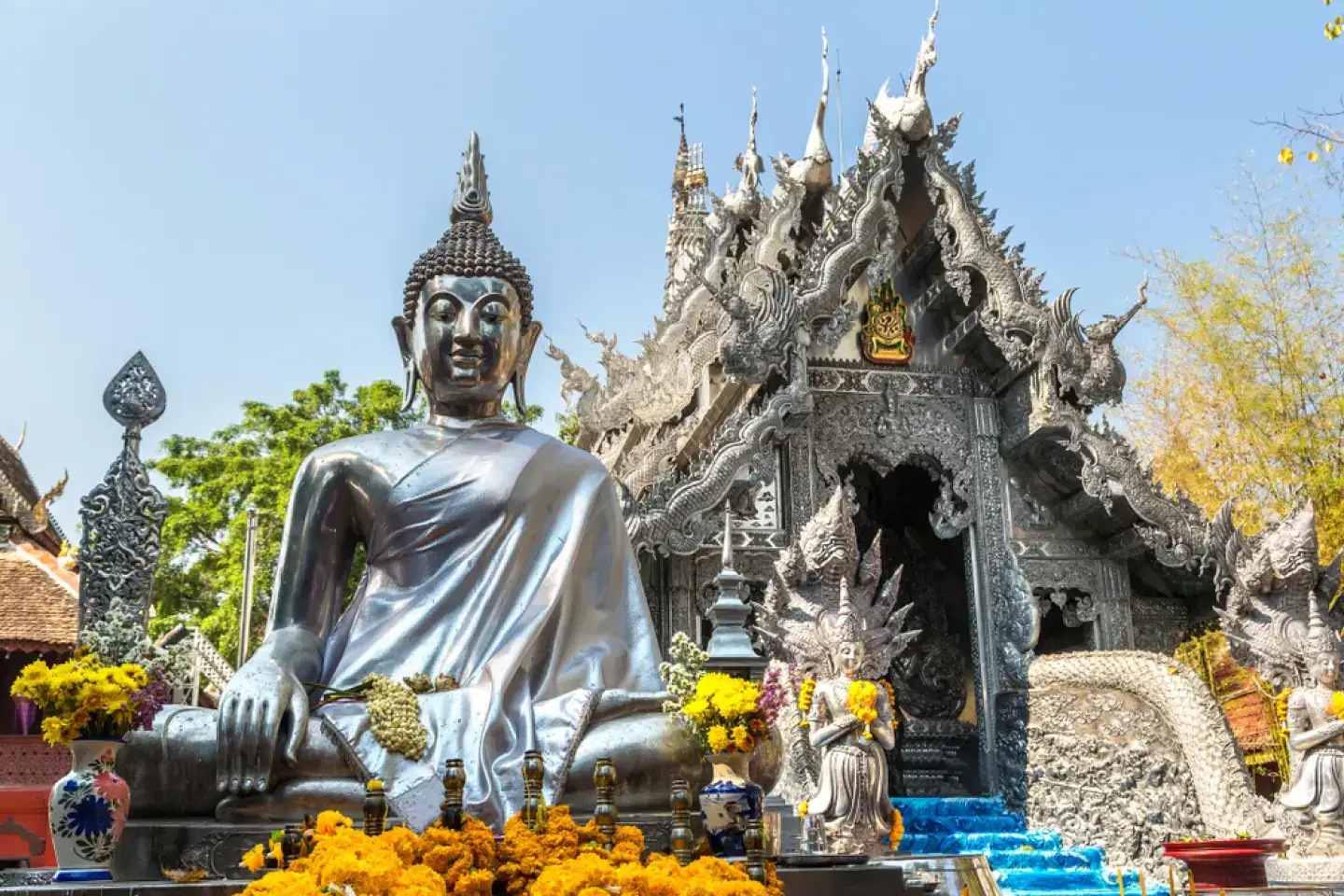
Here's why you should embrace Ruska even more than a pumpkin spiced latte.
There’s much to love about Thailand besides aromatherapy and gold-clad temples. And with action-packed, centuries-old festivals, scrumptious street food for just a few bob and locals that cultivate a welcoming spirit, it’s easy to see why newcomers to Southeast Asia beeline for the Thai Kingdom. Halfway through packing your bags? Here’s our pick of the coolest cultural experiences in the Land of Smiles – from the crossfire of water blasters to culinary masters that know recipes inside out.
Catch a shadow puppetry performance in Nakhon Si Thammarat
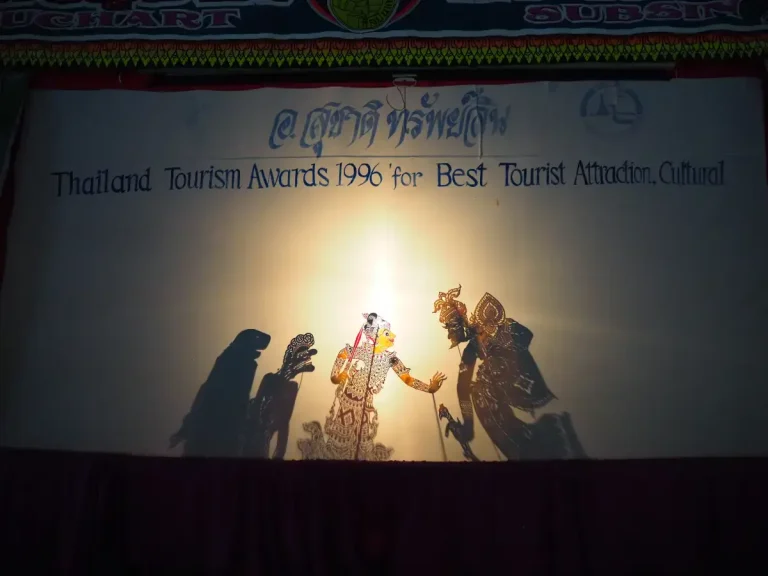
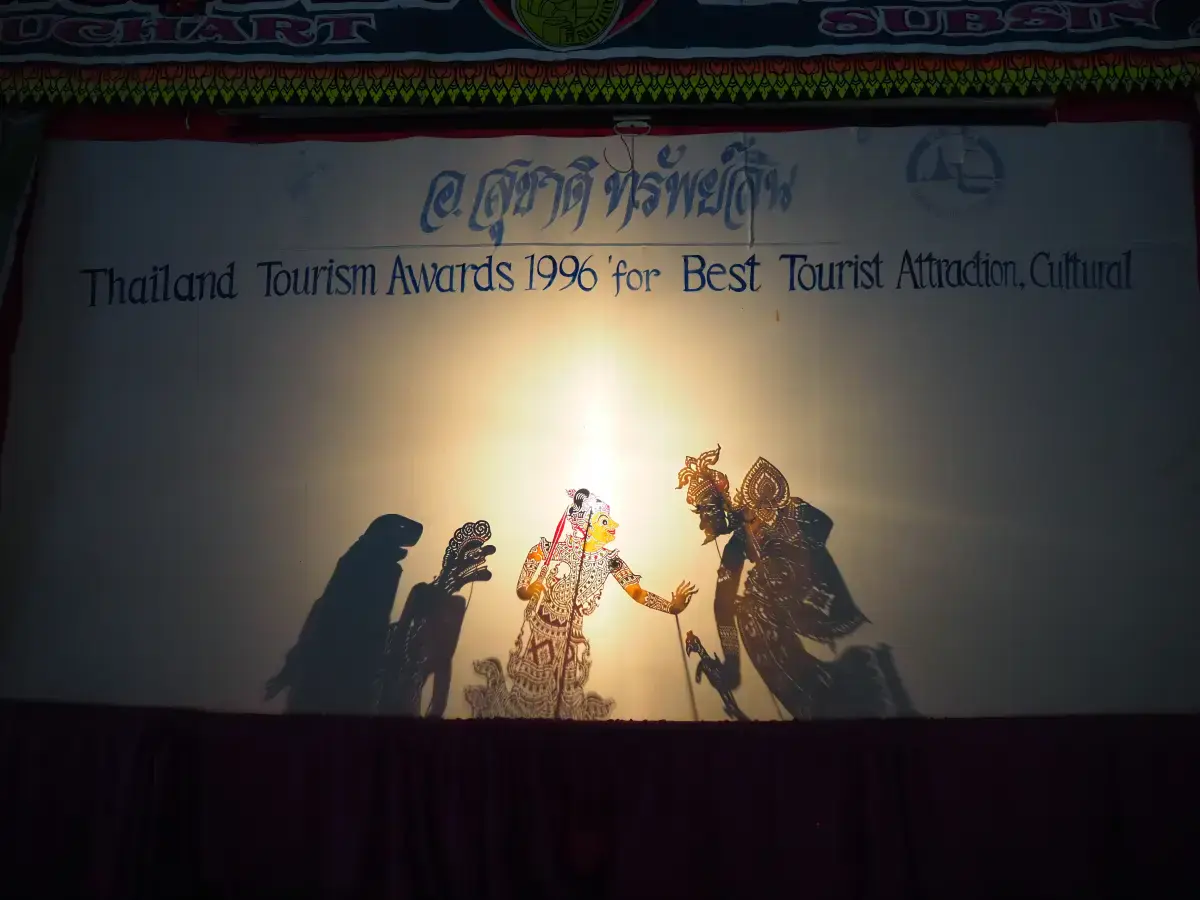
A tradition that has stood the test of time, Thailand’s shadow play is the art of telling stories through still shadows. Puppets come to life as they meet light, set against a translucent screen accompanied by Thai folk songs and a puppeteer spinning yarns, sniggering like a mischievous bully. Once used to cast voodoo spells, the leather puppets of Southern Thailand chronicle how people fled their homes under the rule of the Srivijaya Kingdom between the 7th and 13th centuries, when Thailand’s shadow puppetry started just south of Nakhon Si Thammarat. National artist Suchart Subsin’s Baan Nang Talung, a shadow puppetry museum in Nakhon Si Thammarat, is where to find magic in moving silhouettes and dramatic characters.
Balance Thai flavours in a Koh Lanta cooking class
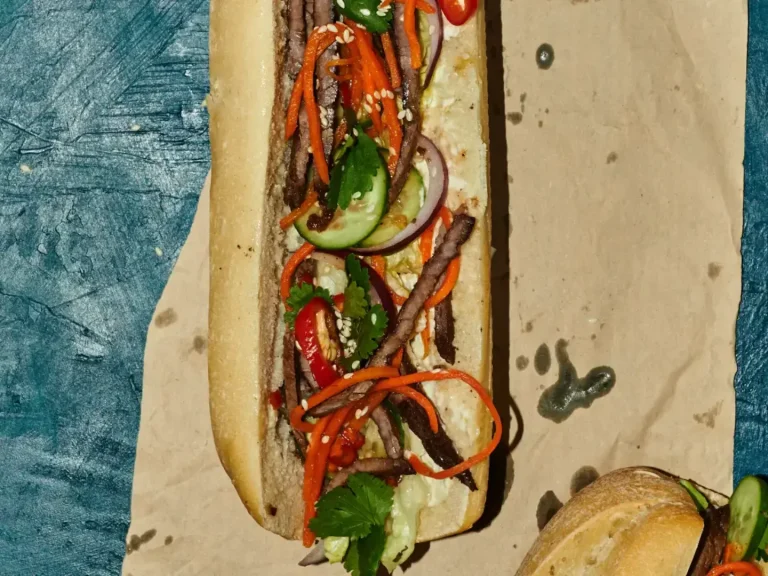
Arrive at Koh Lanta-based Cooking with Mon with an empty stomach. Mon and his wife Maayan go by ‘Cook like a local, eat like a local’ – a tagline that translates into tons of food. The awesomeness starts with making everything from scratch, which includes buying ingredients together at a local market. You can imagine the likes of stir-fries, curries and coconut-based calorie bombs are popular, but the menu may vary, as those who book the class first get to choose what ends up on their plates. The four-and-a-half-hour cooking class feels like an auntie-teach-me-how-to-cook experience, and that means judging your food by taste. If you get something wrong, they offer substitutes, keeping the atmosphere fun and chatty. You’ll leave pigged out, with a recipe book and priceless memories.
Interact ethically with elephants in Khao Sok
Thankfully, the demand for responsible camps that promote riding- and bathing-free interactions is on the rise. One of these rescue centres is Khao Sok Elephant Sanctuary, home to Maruay, formerly used for logging, and Wassana, who danced and painted for people’s entertainment. Sitting atop an elephant’s leathery trunk is a big no-no here, as is climbing all over the pachyderms in mud. What you can do is hand-feed them bananas as they flap their ears to release heat. Lek, the owner, might even ban touching, unless these wonderful, enigmatic beasts of the jungle approach you on a walking tour. Keen to bond with them? Pound molasses with a pestle and hear the gentle giants blow air from their trunks.
Go local with a community tour guide in Phuket
Beyond high-end bars and glitzy coastal resorts, Bang Rong gives you a flavour of a self-sufficient Muslim-Thai community that still relies on fishing and agriculture. During a tour with Prasert Ritraksa, chairperson of Phuket’s Bang Rong community, you can explore the region by kayak, visit a local farm and dive into the ancient art of batik painting. Other educational experiences include cooking workshops, coconut harvesting and a crab bank introduction. On a tour with Sonthaya ‘Tiki’ Kongthip, head of Phuket’s Bangtao community, you can explore the area on a 150cc tricycle, tap rubber and learn to knock up stir-fries and curries. The Muslim-Thai community saves 10% of the tourist spend to help members.
See the sights of Bangkok on a boat tour
Pressed for time? No sweat. You don’t need to engage in high-speed, Bond-style boat chases through Bangkok’s canals after escaping a karate contest to catch a glimpse of the city’s iconic sights. On a one-hour tour with Poomjai Garden, a business that promotes eco-cultural tourism and sustainable practices, you cruise to Wat Paknam Phasi Charoen at quieter, more fuel-efficient speeds. The temple’s 69-metre-tall, gold-plated copper statue of Buddha seated in a lotus pose will rock your Instagram feed – effortless and beautiful. Culture buffs can add additional stops at Wat Arun or the Artist House. Tours are also capped at 10 people to make them feel more private.
Hit the markets to shop and eat your way across the country
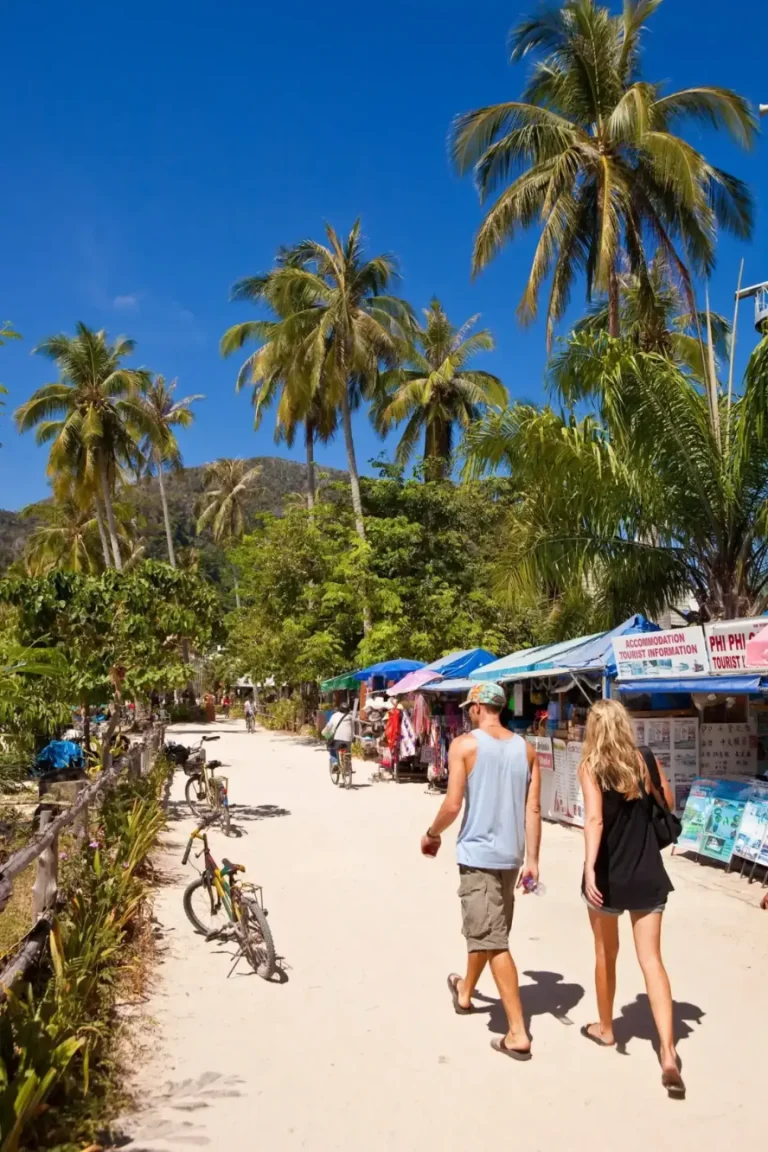
Looking for an authentic floating market experience? Lad Mayom on the outskirts of Bangkok caters for local appetites, from juicy meats and briny seafood to creamy durians and coconut-based snacks – without Damnoen Saduak’s tourist army jostling for space. Or stock up on treats at Bangkok’s Yodpiman Flower Market. Open around the clock, Thailand’s largest flower and produce market is a fragrant maze of stalls touting sweet-scented jasmines, tobacco chews and fresh red roses for your crush.
For intricate silk brocade textiles that royals have worn for over a century, visit Lamphun Thai Silk. The business’ women weaving at wooden looms on Lamphun’s riverbanks are worth a photo or two. The night markets of Mae Hong Son and Chiang Rai boast a jaw-dropping range of handicrafts, lots of them from hill tribe villages. Don’t worry about hunger pangs – street food stalls dishing up chicken broths and herb-infused coconut curry soups beckon on virtually every corner. This is Thailand!
Join nation-wide festivals to write home about
Not sure where to head next? Fly by the seat of your pants. Loi Krathong, Thailand’s Festival of Lights, is celebrated on the bright full moon of the 12th lunar month, which almost always falls in November. The event that sees Thai and foreigners head to waterways has its roots in ancient Sukhothai, a city awash with crumbling ruins. The birthplace of the festival remains the focal point. But krathongs – folded banana leaves pinned to lotus-shaped, buoyant bases decorated with scented flowers and three joss sticks in the centre – are released throughout the kingdom. People use them to honour the water goddess and purge bad luck in the glow of flickering candles drifting across ponds, rivers and lakes.
Similarly, Phuket’s Vegetarian Festival in the autumn is about turning to the gods – the Nine Emperor Gods. They’re former kings of China who emerged some 400 years ago. The belief is that cheek-piercing rituals saved Phuketians from a pandemic originated from Chinese settlers in 1825. They were convinced they’d been punished for killing for food. Apart from mythological gods, locals honour thousands of other figures from 3,000 years of history. Many used to be human, including musicians, doctors, businessmen and soldiers. That’s why you can see musical instruments as well as war-like objects during the processions – thrust through the cheeks of Mah Song, or horses of gods, who take on the community’s sins. The odd range of rituals that fascinate foreigners year after year also includes walking barefoot on burning coals.
Thailand’s past and present are glued together, with tales and traditions woven into the rich cultural tapestry of exuberant festivities. The Thai New Year in mid-April sees the country transform into one big water fight, with everyone drenched in the crossfire of water pistols. While fun dominates during the three-day festival from 13 to 15 April, Songkran, Thailand’s Water Festival, is deeply rooted in an age-old custom that symbolises the washing away of misfortune and guilt.
Temple-hop around Phuket, Surat Thani, Bangkok or Chiang Rai
Culturally curious explorers also get their money’s worth on temple tours across a country renowned for its spiritual life. We’re talking over 40,000 Buddhist temples across the kingdom.
At Phuket’s Wat Chalong, you can get a deeper understanding of the island’s turbulent history. Legend has it a monk named Luang Por Cham created a magic cloth in 1876 which, worn as a turban, allegedly saved Phuket from Chinese tin mine labourers burning and looting the city in a dispute over better working conditions. Today, you can donate sweet-scented jasmine garlands, burst firecrackers and bow in front of the monk’s life-sized wax figure.
Deep in the less-trodden part of Surat Thani province sits Khao Na Nai Luang Dharma Park, a criminally underrated 50-year-old Buddhist temple complex with rugged karst scenery that will knock your socks off. Picture mortar spires and stupas glittering in gold, enthroned on jungle-clad karst bluffs. An eyeful is also the laterite, brick-red chedi reminiscent of the Khmer empire. Keen for a nail-biting ride to Chedi no. 5? Hop on the rusty, open gondola and watch eclectic stupas shrink into miniature.
And then there’s Bangkok, port of call for many first-timers. It boasts squillions of temples twinkling in the sun. One jockeying for position on the banks of the Chao Phraya River is Wat Arun, featured on some 10-baht coins. The 70m-tall temple takes its name from King Taksin’s royal fleet, which found it at sunrise. Ironically, the Temple of Dawn, embellished with thousands of porcelain and ceramic tiles, is most beautiful when the sun sinks orange – best viewed from a scenic riverside cafe or bar.
Up north in Chiang Raiawaits a temple straight out of a fairytale: Wat Rong Khun, better known as the White Temple. Part Buddhist temple, part art exhibition, it glistens as if covered in frost. But the thousands of mirrored glass mosaics set into white stucco are not the only highlight. The ‘bridge of rebirth’ that straddles a sea of desperate hands represents the journey from hell to heaven, or the Buddhist cycle of rebirth to nirvana, a state that ends suffering and rebirth.
FAQs
What’s temple etiquette like?
While you don’t need to maintain a monk-like level of calm when visiting, respect is non-negotiable. Temple etiquette includes talking in a hushed voice and not pointing feet at Buddha images. You’ve got to take shades and hats off before entering, and spaghetti straps, tank tops and shorts above the knees aren’t welcome. It’s best to turn up with knees and shoulders covered, although many temples do offer coverings for hire. Shoes of any kind need to wait at the shoe rack or the stairs, way before the raised threshold that you must not step on. Locals believe it’s connected to the spirit guardian that protects the temple.
Is Thailand the perfect destination for a first visit to Southeast Asia?
Given the choice of high-quality experiences, excellent infrastructure and value for money compared with other long-haul destinations, the answer is definitely yes.
How easy is getting around?
Thailand’s west coast stretches along the Andaman Sea, boasting some 740km of stunning coastline and countless islands. Save for a few uninhabited islets or villages out in the sticks, the coast is connected by boat, bus and minivan. A train runs along the eastern coast, and there are daily flights from Bangkok to the north, east and south of the country.
When should I visit Thailand?
The best time to visit is during the dry season from late November to mid-April, when days are pleasantly sunny. March and April are the hottest months. Weather-wise, the shoulder season from May to June is hit or miss. From July to October, more so in September and October, the monsoon rains drench the cities and islands, but that’s the best time for budget travellers and those who mind high-humidity levels. If you intend to visit the north, avoid the ‘smoke season’ from March to April.
If all else fails, you can still pamper yourself with a soothing Thai massage.