




Everything you need to know: The Best Things to Do and See in Chuo, Tokyo.
I came to Sri Lanka to write a book. Not to find myself, not to tick off a bucket list, just to write, somewhere beautiful and far from the noise and chaos of London. What I hadn’t anticipated, was how much I would fall in love with the country along the way.
I had one mission when planning this trip, try to find the road less travelled and secluded, beautiful properties that were a haven to foster long, lazy afternoons of writing. I hit the jackpot when I discovered Teardrop Hotels, a collection of intimate, characterful properties scattered across the island – each one a window into a different Sri Lanka. From a colonial manor house minutes from the airport to a 15-acre estate that once belonged to one of Asia’s greatest architects, these weren’t just places to sleep, but idealistic getaways with beautiful views and design that truly respected the culture.
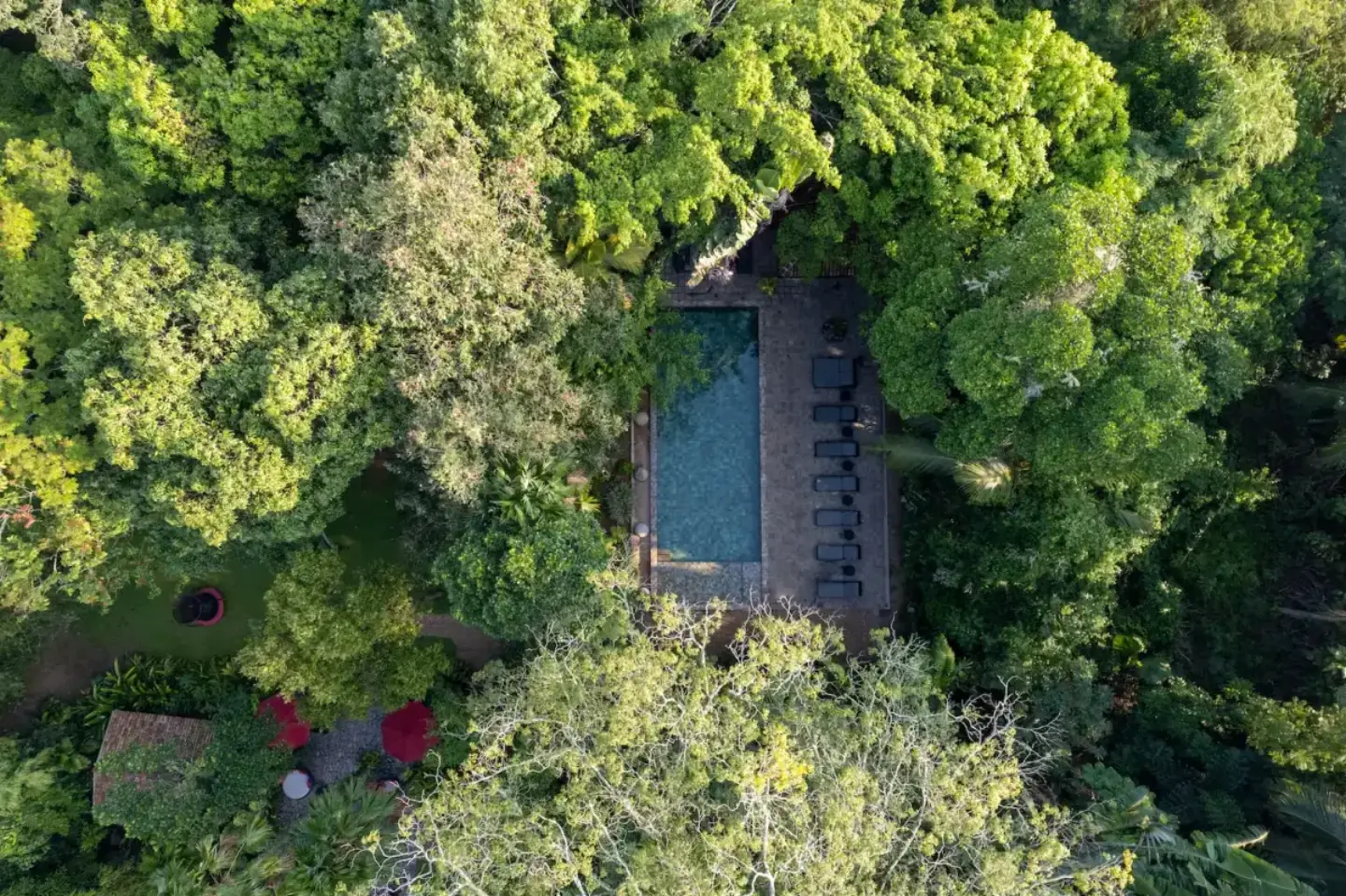
Wallawwa, Near Colombo
First stop Colombo. Visiting in the rainy season, known for being less touristy, I was welcomed with a wall of tropical rain. Choosing to forego the busy capital, I headed straight to Wallawwa, my accommodation about 20 minutes from the international airport. The 210-year-old colonial manor house, once a governor’s residence and later an RAF base during World War II, sits within tropical gardens that hum quietly with birds and butterflies.
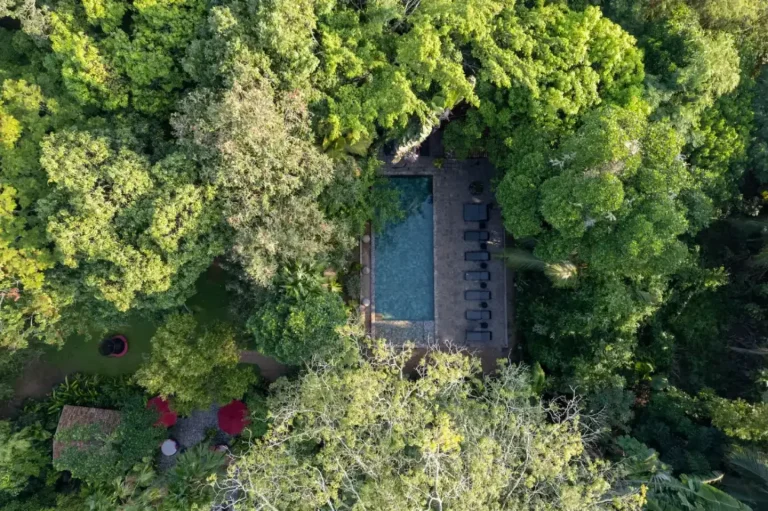
Finally, the rain cleared and by the afternoon I was writing steadily by the pool, the heat just bearable enough to concentrate. Dinner was a mud crab curry that blew my mind. The traditional Sri Lankan recipes just lend to the experience of this property which is set in the lush gardens.
Wallawwa works beautifully as both an arrival and departure hotel, absorbing the jetlag with grace. Then it’s on to the next location. Be prepared to do lots of driving in Sri Lanka. It’s a small country, but fairly spread out – making it feel larger than it is!
Camellia Hills, Dickoya
The hill country of central Sri Lanka has been shaped by tea for nearly two centuries. The British planted the first estates here in the 1860s, after a coffee blight wiped out the island’s previous crop almost overnight. What followed was a transformation so total that it’s now impossible to imagine these slopes as anything else. The highlands around Dickoya -elevation, mist, the quality of the light – turned out to be near-perfect conditions for growing some of the finest tea in the world.
The drive itself takes four hours from Colombo, climbing steadily through the Sri Lankan highlands in a journey that earns its length. Elephants appeared at the roadside en route and troops of monkeys scattered across the verges and power lines as the air cooled and the city fell away behind us. By the time Camellia Hills appeared, perched above the broad silver expanse of Castlereagh Reservoir, I was completely in awe of the vistas in this country.
The reservoir itself has its own history: built by the British to power the region’s growing tea industry, it now generates electricity for the surrounding area, its waters glassy and still in the early mornings and ruffled to copper in the late afternoon light. The bungalow sits above it gracefully.
I stayed for two days, and on the first morning, walked the tea gardens with a stray dog who appointed himself my guide, pausing to exchange curious looks with schoolchildren and local workers moving through the rows. Tea in Sri Lanka is still picked entirely by hand – no machine can navigate the steep terrain or replicate the judgement of an experienced picker. It’s hard work. Perhaps the most impressive part of Camellia Hills is the beautiful balcony overlooking the tea plantations and reservoir – the ideal spot to write, relax or enjoy a sundowner. Adding to the flock of nature I’d already seen, nightfall bought hundreds of fireflies which was a magical sight and experience.
Sigiriya
Sigiriya isn’t on the formal Teardrop hotel trail, but it earns its place in any Sri Lanka itinerary and sits neatly between the hills and Kandy. The town itself has a laid-back, slightly hippy energy – good cocktails, great sunsets and a laidback vibe.
Lion Rock, the ancient UNESCO World Heritage citadel rising 200 metres from the jungle floor, is the obvious draw. But the savvier move is Pidurangala Rock, a short hike away. Up here, you get an elevated view back across Lion Rock itself, the geometry of it suddenly making sense from above – and the crowds are a fraction of what you’ll find on the main attraction (the hike is a bit easier too!) Morning one included a 4:45am tuk-tuk, a pre-dawn hike in the warm dark, and the sunrise arriving over Lion Rock from a near-empty summit.
The Poya festival – Sri Lanka’s monthly full moon celebration – fell during my time here and also coincided with Vesak which only happens once a year. The streets were filled with parades, lanterns and lights, the Buddhist devotion that underpins so much of daily life made briefly, joyfully visible.
Kandy
I arrived in Kandy during the tail end of Vesak, and the city was still buzzing. A walk around the reservoir and past the Temple of the Tooth, the colonial clock tower and the markets contrasted vibrantly with the quiet calm of the tea hills. Despite the heat, Kandy should be walked. There’s so much to see – from rooftop bars with views over the city, a plethora of boats and tea houses. I decided to indulge in a treatment at Laama Grand, a traditional Ayurvedic spa, and had a massage which undid three days of writing-chair tension. The salon was beautiful and cool, and the technique impressive.
A highlight was the guided tuk-tuk tour on day seven. Starting at nine in the morning, we covered a viewpoint, a working tea factory with tasting, herb fields where an Ayurvedic practitioner explained the medicinal properties of plants I’d been walking past unaware, and a sweeping route around the city. By lunchtime was at Yaki Maki – an excellent Japanese restaurant was better than any Japanese restaurant I’d visited in London, then I was writing again on the Airbnb terrace overlooking the rooftops by afternoon.
Goatfell, Nuwara Eliya
Nuwara Eliya sits high enough that you may need a jumper or can finally indulge in a relaxing bubble bath. I stayed at the beautiful Goatfell, a 103-year-old former estate manager’s bungalow with just four bedrooms, that feels like stumbling into someone’s private country house. That’s if that person happened to have an infinity pool with panoramic mountain views.
The mornings here were my favourite of the entire trip. Breakfast at a hilltop viewpoint at looking out over tea country was a standout experience. An afternoon walk through the plantations gave me a much needed writing break. Fire-pit sundowners as the temperature dropped ended the day in the best way. Goatfell made me understand what people mean when they talk about the English-style character of Nuwara Eliya – the colonial architecture, the cool air, the slightly formal, slightly mischievous atmosphere. Definitely a must-visit, and not super touristy at all.
Nine Skies, Ella
Ella, by comparison is a popular tourist spot, so it’s nice to stay a little further out in the hills to avoid too much hustle and bustle. The journey to Nine Skies made the experience. A three-hour scenic train ride through the highlands – one of the great rail journeys in Asia – deposits you (or in my case, nearly doesn’t, following an accidental late exit at the wrong stop) in Ella, from where it’s a short transfer to the hotel.
A colonial-era tea bungalow built around 1918, Nine Skies has five bedrooms and views over the Demodara Loop, the extraordinary spiral railway formation that allows trains to gain altitude in a tight valley. The property sits in the hills above Ella, and the surrounding trails are justification enough for the visit. I walked every afternoon – again accumulating many doggie friends along the way.
The Nine Arch Bridge hike, an early morning walk to one of Sri Lanka’s most photographed landmarks, is unmissable, best done before the tourist groups arrive and the temperature is moderate. Ella town itself is lively, well-stocked with good shopping and bars, and easy to reach by tuk-tuk.
Udawalawe
Whilst many visitors to Sri Lanka choose to visit Yala National Park for the chance to see the elusive leopards, Udawalawe should not be slept on and is a great alternative stop if you want to do safari. The national park is just over 30,000 hectares and home to around 300 elephants.
Here tours offer smaller groups, closer encounters, and a density of wildlife that catches you off-guard. In a single morning, I saw elephants at close range, jackals, monkeys and a dozen bird species. The town itself is small and relatively functional. Come for the safari; leave after.
Fort Bazaar, Galle
Galle Fort is a UNESCO-listed promontory on Sri Lanka’s southern coast – Portuguese foundations, Dutch colonial architecture, a working lighthouse – and Fort Bazaar sits within its walls, an 18-room boutique hotel with interiors that reference the fort’s Moorish trading heritage. Of all the properties on this trip, this one had the most arresting décor: textiles and tilework, courtyard light, the sense that several centuries of commerce and culture had been elegantly absorbed into the walls.
A guided walk of the fort on the second morning introduced me to other travelling guests I wouldn’t otherwise have met. The afternoon took me to Unawatuna beach – turquoise, busy, deservedly famous – with a stop at a turtle sanctuary on the return that recalibrated the day entirely. Cocktails at Fort Bazaar in its striking and ornate bar closed the evening perfectly. A morning rest at the luxurious pool makes you not want to leave.
Lunuganga, Bentota
I feel I may have kept the best until last. Bentota is a small beachside town, not too far from Colombo and a pleasant stop off on the way back to the airport. Lunuganga wasn’t on my radar in the way the other properties were, and it became the most extraordinary place I have ever visited.
The former country home of Geoffrey Bawa – Sri Lanka’s greatest architect, the man who effectively invented tropical modernism – sits on a 15-acre estate near Bentota, the gardens shaped over four decades into something that operates at the border of landscape and art. Every view has been considered. Every tree placement is intentional. The hotel’s ten rooms are individually designed, and the whole property is almost like an art gallery, filled with Geoffrey’s most prized possessions and artefacts.
At sundowner time, gin and tonics arrived as the sky turned gold, then a brief shower came through and left a rainbow over the garden. Truly stunning and perhaps the most idyllic space I got to write in on my trip. Near three weeks in Sri Lanka gave me a half-completed book, plenty of fun travel memories, a camera roll stuffed with glorious vistas and a new love of Sri Lankan cuisine which, in my opinion, is severely underrated in London.
The path travelled through the lens of Teardrop hotels was really special, as well as meandering off their routes to enjoy the slightly more touristy side of Sri Lanka. I will more than certainly be back soon – as such a huge and diverse country it’s impossible to complete in such a short time – but that’s definitely a reason to return.